By Josh Collins: Our Newsletter writer at Reachout ASC
September 2024
Teaching Assistants can work 1:1 with some autistic children in schools.
From my first day of reception to the final question on my third physics paper in June of 2016, I have had a teaching assistant sat beside me, or with me, in some capacity. For many across the country, a teaching assistant is going to be one of the people they spend the most time with. I was not a unique case; this was also true for me.
Over my time, I have developed strong emotional bonds with teaching assistants. Other times, I have had the opposite; having either silently or very verbally wishing to have someone else in their place. Regardless of how I feel about them, they have all bagsied a plot of land in my memory and summative ideal of a teaching assistant.
https://reachoutasc.com/wp-content/uploads/2024/09/ReachoutASC156of296-scaled.jpg17032560Lynn McCannhttps://reachoutasc.com/wp-content/uploads/2026/09/NewLogo_2026-05-27-at-16.16.43-1030x357.pngLynn McCann2024-09-28 17:43:122024-10-23 11:26:17My experience of having a teaching assistant throughout my school years: An autistic adult’s perspective.
Written by Kirsten Illingworth Specialist TA with Reachout ASC.
“Autistic children may react to a bereavement in different ways to neurotypical children. Some of the underlying perceptual and processing difficulties observed in autistic children may affect their understanding of death and their reaction to a bereavement. Autistic children, like any others, need their grief both recognised and understood and will need opportunities to express how they feel” (Katie Koehler DClinPsych 2016).
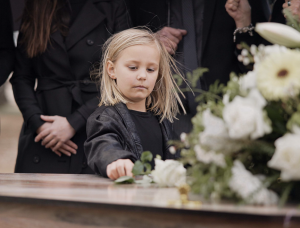
It is difficult to explain death and bereavement to a child and more so to an autistic child. During the recent Covid-19 epidemic many families have lost a loved one. For families with an autistic child, this is made harder as they struggle to express how they feel or understand their emotions. As well as suffering the loss of the person that has died, autistic children can be further distressed by all the changes that might happen in their day-to-day lives as a result of the bereavement. In this blog, I will try to give you tips to help you support your autistic child to understand what is happening.
Prepare
Involve your child and try to prepare them. If someone is dying due to illness explain what is happening, keep them informed of any changes. If it is a sudden death this is not possible, but they will pick up and be aware of any changes within the household such as the atmosphere or routines. Talking and explaining about what has/is happening and also reassuring the child that it will not happen to them may relieve some anxiety and stress for that child. You can do this matter-of-factly and simply. Try not to expect that they will feel the same emotions as you. Keeping your own emotions calm as you talk to them can be difficult but having something to read or look at (such as symbols and pictures) can give you both something tangible to focus on.
Behaviour
Autistic children may not respond to the death of someone close to them in the same way as other children, but this does not mean they are not grieving. Processing the emotion and facts of the death can take much more time than you might expect. Don’t go on their immediate response to judge how well they are processing it. Changes in behaviour, increased anxiety, confusion, refusal to do things they normally do as well as talking about death are some of the warning signs that you must watch out for as this could mean your child needs more help and support as they are not coping as well as you thought.
Feelings
Autistic children can find recognising/expressing feelings difficult. To help your child to express/recognise their feelings you can look at different emotions in stories, pictures or, in the people around them so they can try and understand how they feel. We have some emotional literacy ideas on our blog about autism and anxiety.
Talking
When explaining ‘Death’ to an autistic child they may need help with understanding the idea of death as well as opportunities to express their grief. You can use simple, concrete language and try to avoid using euphemisms such as ‘lost’, ‘passed away’ or ‘gone to sleep’. You may need to explain what dead means in concrete terms – ‘When someone is dead their body is no longer working and their heart has stopped. A dead body cannot move or feel anything, so there is no pain.’
Memory Box
A good way to help your child could be to talk about the person who has died. You could maybe create a memory box of things that belonged to the person who has died or that reminds the child of the person that has died. By making it together with a trusted adult may allow them to open up about their feelings and worries.
Social stories
Social stories are a great way to explain things to autistic children. They can be tailored to your child’s needs and help explain feelings and emotions as well as events, such as funerals and what has happened. Lynn has created three social stories related to this topic in her book “Stories that Explain” but whatever you do in writing a social story keep it factual, positive and remember you are explaining the concept to them, not how they must feel or react. Give them choices about what they can do and explain the ways other people might feel or react without putting pressure on them to respond in a particular way.
Finally, we must let your autistic child know that it is ‘OK’ to have these feelings of loss and grief, be upset or angry, or even cry or not cry. Everybody is an individual and will deal with death differently. Attached are some resources that can help you and your child.
References Katie Koehler DClinPsych (2016) Supporting children and young people with Autism Spectrum Disorder through bereavement, Bereavement Care, 35:3, 94-101, DOI: 10.1080/02682621.2016.1254437
Autism Bereavement Resources
(we do not endorse any particular resources, these are here for you to search and find the resources that work for your child).
https://reachoutasc.com/wp-content/uploads/2021/03/Screenshot-2026-04-07-at-20.27.54.png658864Lynn McCannhttps://reachoutasc.com/wp-content/uploads/2026/09/NewLogo_2026-05-27-at-16.16.43-1030x357.pngLynn McCann2021-03-20 13:50:342026-04-07 20:32:29Supporting autistic children through bereavement.
We use cookies to personalise content, to provide social media features and to analyse our traffic. We also share information about your use of our site with our social media and analytics partners. View more
Cookies settings
Accept
Decline
Privacy & Cookie policy
Privacy & Cookies policy
Cookies list
Cookie name
Active
Last updated: June 2026
One-Minute Summary
What we collect
• Information you give us, such as your name and email address.
• Technical information, such as your IP address and browser type.
Why we collect it
• To provide our services.
• To respond to your requests.
• To improve and secure our website.
• To meet legal requirements.
What we do not do
• We do not sell your personal information.
• We do not collect more information than we need.
• We do not keep information longer than necessary.
Your choices
You can ask us to:
• Show you the information we hold about you.
• Correct inaccurate information.
• Delete information in some situations.
• Stop certain uses of your information.
Need help?
If this notice is difficult to understand, contact us and we can provide it in an alternative format.